Listed Buildings of Barnes
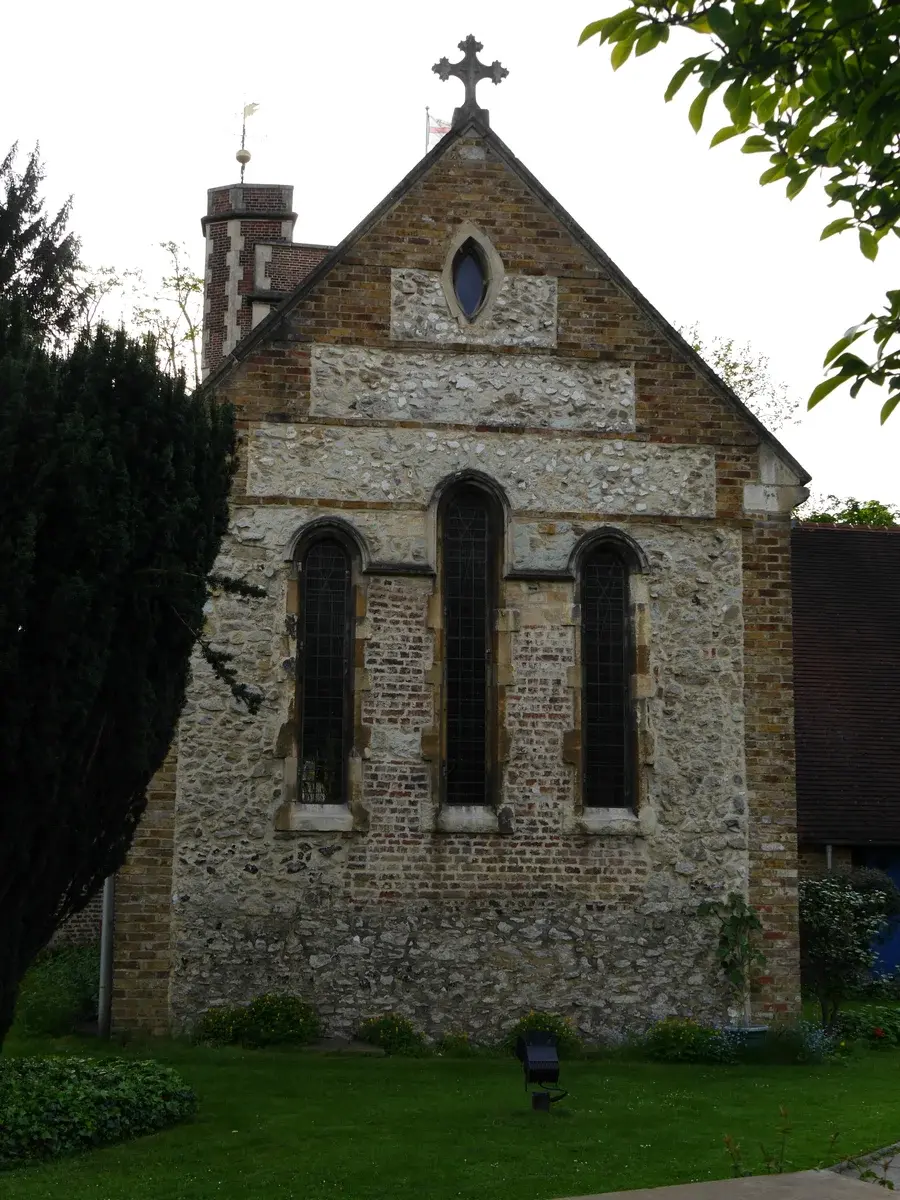
Barnes contains some thirty to forty nationally listed buildings, reflecting a built heritage that stretches from the twelfth century to the Victorian era. Most hold Grade II status, with two or three achieving the higher Grade II* designation. There are no Grade I listed structures in Barnes.
Grade II* Buildings
St Mary’s Church (Church Road) – The parish church, with Norman origins dating to 1100–1150, a Tudor brick tower of about 1485, and a modern interior by Edward Cullinan following the fire of 1978.
Milbourne House (18 Station Road) – The oldest private house in Barnes, with an early eighteenth-century facade concealing a seventeenth-century staircase and earlier features. Henry Fielding, the author of Tom Jones, lived here around 1750. Listed since 12 May 1950, it was among the first buildings in Barnes to receive statutory protection.
Limes House (Church Road) – A substantial early house with Grade II* listed forecourt piers, one of the most architecturally significant properties in the village.
The Terrace
Twelve houses on The Terrace are individually listed at Grade II, including numbers 3, 7, 7A, 8, 9, 10, 11, 13, 14, 28, 30 and 31. Built from the 1720s, these Georgian brick houses overlooking the Thames were originally summer residences for wealthy Londoners. Number 10 was home to Gustav Holst; number 14 to Ninette de Valois; number 26 to Ebenezer Cobb Morley, whose house collapsed during basement works in 2015.
Barnes Green and Church Road
The Sun Inn (7 Church Road), Grade II listed, began life as a Georgian coffee house and has served beer since about 1776. Rose House (70 Barnes High Street), a seventeenth-century building first recorded as “Ye Sign of the Rose” in 1632, was saved from demolition in the 1970s and is now the headquarters of the Barnes Community Association. Old Essex House on Station Road dates from the late sixteenth century, with later alterations. Strawberry House (101 Church Road), The Grange and The Homestead form a listed group with St Mary’s Church along Church Road.
Transport Heritage
Barnes Station, designed in Tudor Gothic style and opened in 1846, is the last brick-built station of its kind on the Richmond branch. Barnes Railway Bridge, with its original 1849 cast iron arches standing alongside the 1895 replacement, has been Grade II listed since June 1983.
Castelnau Villas
At 91–125 and 84–122 Castelnau, twenty pairs of classical villas designed by William Laxton around 1842 form one of the larger listed groups in the area. Two storeys with basements, in yellow stock brick with stucco dressings, they represent the suburban development that followed the opening of Hammersmith Bridge.
Buildings of Townscape Merit
Beyond national listing, Richmond Council maintains a register of Buildings of Townscape Merit – locally significant structures that enjoy a presumption against demolition. In Barnes, dozens of buildings carry this designation, including properties along Barnes High Street, Church Road and the residential streets around the Green.
The Listing System
Buildings are listed by the Secretary of State for Culture, Media and Sport on the recommendation of Historic England. Anyone may nominate a building for consideration. Once listed, any alteration affecting a building’s character requires Listed Building Consent, and unauthorised works carry criminal penalties. The Barnes Green Conservation Area, designated on 14 January 1969, provides an additional layer of protection for the village’s historic core.
Image sources
- listed-buildings.webp — St Mary’s Church, Barnes. Author: Ethan Doyle White. License: CC BY-SA 4.0. Source
Sources
- Historic England – Search the List
- British Listed Buildings – Barnes Ward
- Richmond Council – Listed Buildings
- The Terrace, Barnes – Wikipedia
- 18 Station Road, Barnes – Wikipedia