Music Heritage of Barnes
Barnes can credibly claim to be one of the most musically significant villages in Britain. From Olympic Studios, where some 1,075 albums were recorded, to The Bull’s Head, one of Britain’s oldest jazz venues, and the home of composer Gustav Holst, the area’s musical heritage spans genres and centuries.
Olympic Studios (1966–2009)
The building at 117 Church Road opened as Byfeld Hall in 1906 and served as a cinema and theatre before becoming one of the world’s most celebrated recording studios. The studio relocated from Carlton Street to Barnes in late 1966 under new owners Cliff Adams and John Shakespeare, with chief engineer Keith Grant overseeing the technical setup. It operated until February 2009.
Landmark recordings made in Barnes include:
- The Rolling Stones — Beggars Banquet (1968), Let It Bleed (1969), Sticky Fingers (1970–71)
- Jimi Hendrix Experience — Are You Experienced (1967), Electric Ladyland (1968)
- Led Zeppelin — debut album (1968, recorded in 36 hours for £1,782)
- The Who — Who’s Next (1971), Quadrophenia (1973)
- Procol Harum — “A Whiter Shade of Pale” (1967)
The studio reopened in October 2013 as a luxury cinema with a small recording studio still in operation. Olympic Studios Records, an independent vinyl shop at 66 Church Road, opened in July 2018 to celebrate the recording heritage.
The Bull’s Head (1959–present)
The Bull’s Head on Lonsdale Road has hosted live jazz since November 1959, opening the same year as Ronnie Scott’s in Soho. Under landlord Albert Tolley, it became known as “the suburban Ronnie Scott’s.” Performers have included Coleman Hawkins, Ben Webster, Humphrey Lyttelton, Stan Tracey, and Ronnie Scott himself.
In 2009, the Brecon Jazz Festival named The Bull’s Head one of twelve venues that made the most important contributions to jazz in the United Kingdom.
Gustav Holst (1908–1913)
Composer Gustav Holst lived at 10 The Terrace from 1908 to 1913. During his Barnes years, he composed works including the chamber opera Savitri (1908), Choral Hymns from the Rig Veda (1908–1912), and the orchestral suite Beni Mora (1909–1912). He left Barnes in 1913, moving to Brook Green, where he began composing The Planets in 1914. A blue plaque marks the house.
Marc Bolan’s Rock Shrine
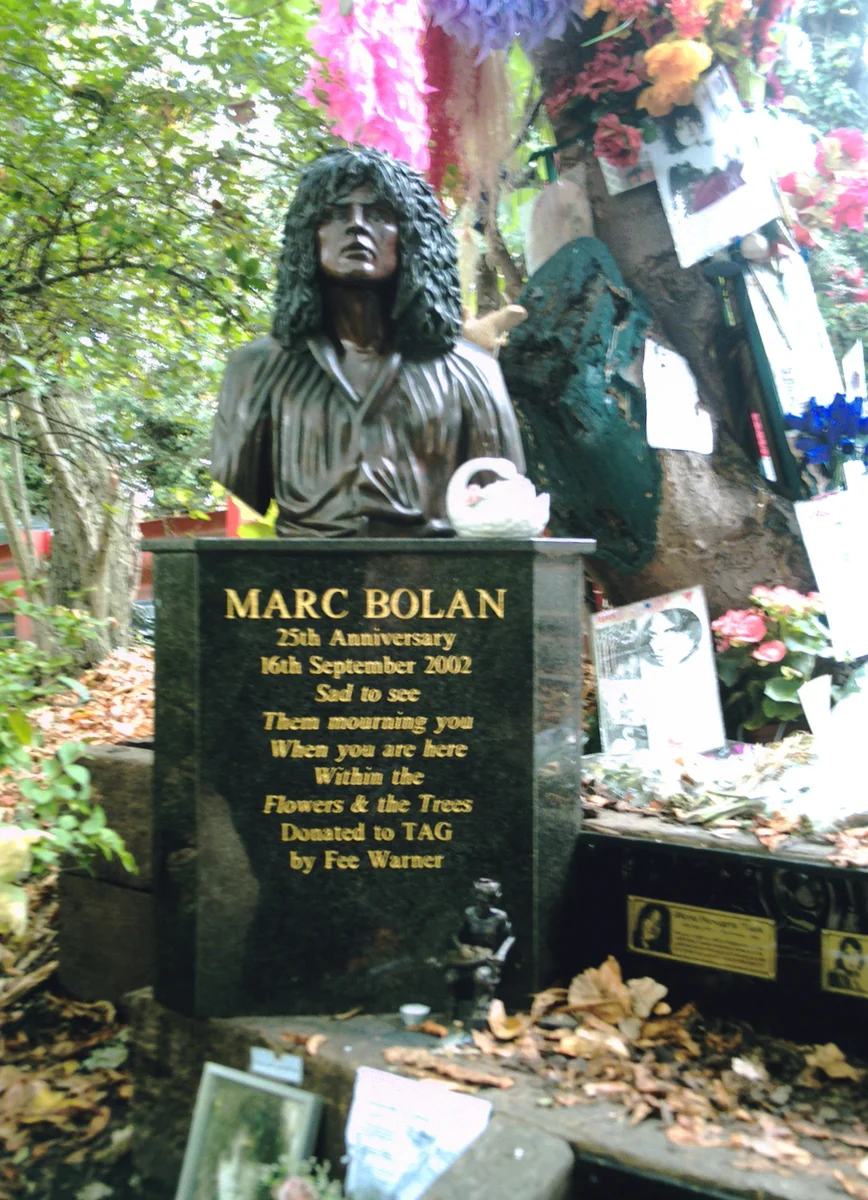
On 16 September 1977, Marc Bolan of T. Rex died aged 29 when the car driven by his girlfriend Gloria Jones struck a sycamore tree near Gipsy Lane on Queen’s Ride, Barnes. The tree has become a pilgrimage site. In 2002, a bronze bust sculpted by Jean Robillard was unveiled by Bolan’s son Rolan. Fans gather every September on the anniversary. Bolan had also recorded at Olympic Studios, adding another layer to his Barnes connection.
Barnes Music Festival
Founded in 2013 with the theme “Holst & the English Tradition,” the Barnes Music Festival is an annual two-week festival held each March. Events span choral, orchestral, jazz, opera, and film, with St Mary’s Church as the core venue. The 2026 festival theme is “Musical Roots,” with 40 events planned.
Choirs and Local Music
The Barnes Choir (founded 1953) has approximately 70 singers performing classical choral works. Barnes Community Choir (founded 2011) offers non-auditioned singing with around 50 members. St Mary’s Church hosts the “St Mary’s at 3” concert series and offers choral and organ scholarships.
Other Musical Connections
Composer Howard Goodall CBE (themes for Blackadder and The Vicar of Dibley) has been a Barnes resident. T. Rex, David Bowie, Queen, the Beatles, Adele, and many others all recorded at Olympic Studios during its 43-year history.
Image sources
- music-heritage.webp — Marc Bolan bust, Bolan’s Rock Shrine. Author: Britmax. License: CC BY-SA 3.0. Source
Sources
- Olympic Studios — Wikipedia
- The Bull’s Head, Barnes — Wikipedia
- Marc Bolan’s Rock Shrine — Wikipedia
- Barnes Music Festival — official site
- The Barnes Choir — official site