Olympic Studios
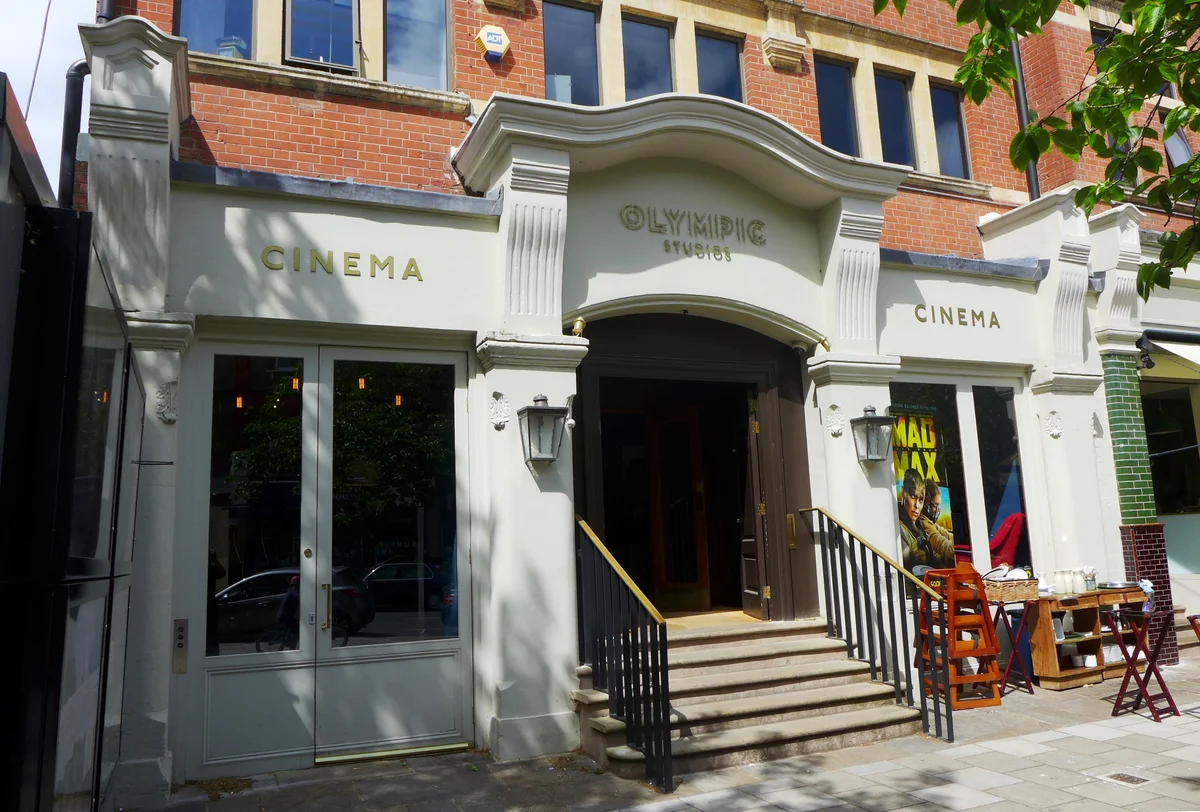
Olympic Studios is a cultural landmark on Church Road, Barnes, whose walls have witnessed over a century of entertainment – from Edwardian theatre and silent cinema to some of the most iconic rock recordings of the twentieth century. Today it operates as a luxury cinema, restaurant, and members’ club, with a small recording studio preserved as a tribute to its extraordinary musical heritage.
From Theatre to Cinema (1906–1950s)
The building at 117 Church Road was constructed in 1906 as Byfeld Hall, a theatre for the Barnes Repertory Company. In 1910 it received its first cinematograph licence and was renamed Barnes Cinema, screening early silent films.
After the First World War, extensive renovations in 1919 added a Tea Lounge and orchestra. In the 1920s, theatrical producer Philip Ridgeway transformed the building into Barnes Theatre, staging acclaimed productions featuring rising stars John Gielgud, Charles Laughton, Robert Newton, and Claude Rains.
By the 1950s the cinema had closed, unable to compete with larger West End screens, and the building was converted into television production studios.
The Recording Studio Era (1966–2009)
Olympic Studios was founded in the late 1950s by Angus McKenzie at a separate location on Carlton Street. When that lease expired, the studio relocated to Barnes in 1966. Under new owners Cliff Adams and John Shakespeare, and with the young Keith Grant as manager and chief engineer, Olympic Barnes quickly became Britain’s pre-eminent independent recording studio.
Grant, who had joined Olympic at the age of eighteen and was promoted to manager at just twenty, personally engineered nearly 120 Top 20 hits. He introduced an innovative acoustic system of rough-sawn wooden slats over sound-absorbing panels, making the studio equally suited to rock bands and full orchestras. Working with Dick Swettenham and Jim McBride, Grant helped develop bespoke recording desks that became legendary in the industry.
Landmark Recordings
The list of artists who recorded at Olympic Barnes reads as a roll-call of popular music history:
- The Rolling Stones – six consecutive albums (1966–1972), including Beggars Banquet, Let It Bleed, and Sticky Fingers
- Led Zeppelin – sessions for their early albums, from Led Zeppelin (1969) through Physical Graffiti (1975)
- Jimi Hendrix – large parts of Are You Experienced, Axis: Bold as Love, and Electric Ladyland
- The Beatles – sessions for “All You Need Is Love” (1967), “Something,” and “You Never Give Me Your Money” (1969)
- The Who – Who’s Next (1971), Quadrophenia (1973), and Who Are You (1978)
- Queen – part of A Night at the Opera (1975)
- Procol Harum – “A Whiter Shade of Pale,” engineered by Keith Grant
Other notable artists include David Bowie, Dusty Springfield, BB King, Pink Floyd, Ella Fitzgerald, Marc Bolan, Ray Charles, and U2.
Film Soundtracks
Olympic was equally important in film. Soundtracks recorded at the studio include The Italian Job (1969), Jesus Christ Superstar (1973) – for which Keith Grant won a BAFTA for Best Soundtrack – The Rocky Horror Picture Show (1975, recorded in Studio Two), Life of Brian (1979), Cry Freedom, The English Patient, Shadowlands, The Fisher King, and Shirley Valentine.
Closure and Conversion
In February 2009, owner EMI closed the studio after forty-three years of continuous operation in Barnes. After four years standing empty, the building was sensitively converted by architects Henley Halebrown and reopened on 14 October 2013 as a cinema and entertainment complex.
The conversion created two cinema screens within the original auditorium – Screen 1, with 120 seats and a Dolby Atmos sound system (the first in a London cinema at the time) – together with a bar and restaurant open to the public, a private members’ club upstairs, and a small recording studio whose acoustics were completed by Keith Grant and Russel Pettinger.
Legacy
Olympic Studios represents an unbroken line of cultural use stretching back to 1906 – theatre, cinema, recording studio, and cinema again. Its contribution to British rock music is immeasurable: the Stones, Zeppelin, Hendrix, the Beatles, and the Who all made defining records within its walls. The building’s return to cinema honours its original purpose while preserving the memory of what Keith Grant and his colleagues created here.
Keith Grant died on 18 June 2012, aged 71, the year before the cinema opened.
Image sources
- olympic-studios.webp — Olympic Studios, Barnes. Author: Ewan Munro. License: CC BY-SA 2.0. Source
Sources
- Olympic Studios – Wikipedia
- Keith Grant: The Story Of Olympic Studios – Sound on Sound
- Olympic Studios – Our Story (official)
- Henley Halebrown – Olympic Studios
- Olympic Studios – uDiscover Music