The Birth of Football
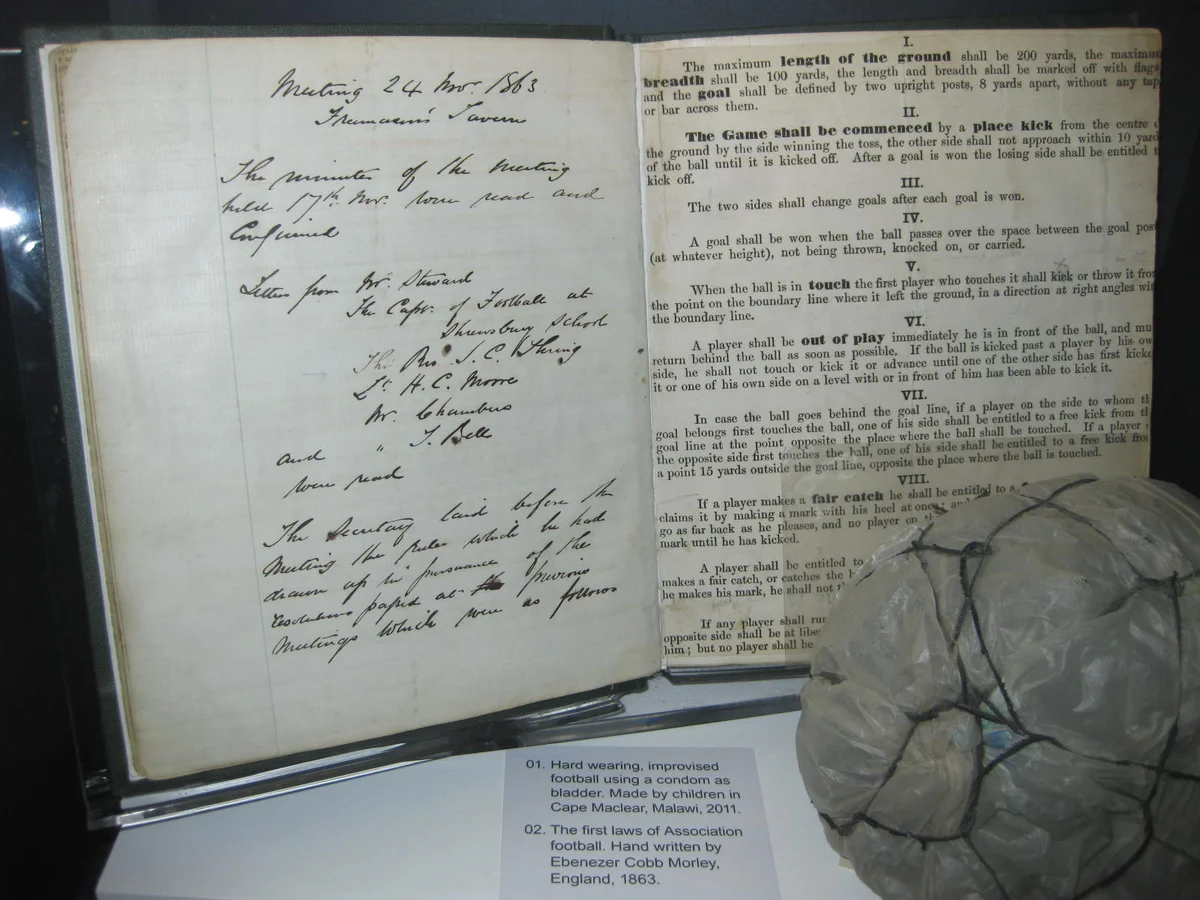
Barnes holds a unique place in the history of world sport. It was here, in a riverside house in the 1860s, that a solicitor named Ebenezer Cobb Morley drafted the rules that would become the foundation of modern football – the most popular sport on earth.
Barnes Football Club
In 1862, Morley founded Barnes Football Club, one of the oldest football clubs in the world. He served as its captain until 1867. At the time, there was no agreed set of rules for the game. Different schools and clubs played by wildly different codes, and matches often descended into violent disputes.
The Letter That Changed Sport
In 1863, Morley wrote a letter to Bell’s Life newspaper proposing the creation of a governing body for football, modelled on cricket’s existing structure. His letter found a receptive audience.
The Football Association
On 26 October 1863, representatives of eleven football clubs and schools gathered at the Freemasons’ Tavern on Great Queen Street in London. Morley, representing Barnes FC, was elected the first secretary of the newly formed Football Association.
Over six meetings, the FA debated and codified thirteen Laws of the Game. The final session, on 8 December 1863, proved decisive. Representatives who favoured “hacking” (kicking opponents’ shins) and carrying the ball did not attend, and both practices were banned. This was the moment that distinguished association football from rugby football – and the rugby clubs withdrew, eventually founding the Rugby Football Union in 1871.
Morley drafted the laws at his home at 26 The Terrace, Barnes. In 2009, English Heritage placed a blue plaque on the house in his honour. Tragically, the house collapsed during basement excavation work in November 2015.
The First Match
On 19 December 1863, the first match under the new FA rules was played at Limes Field, Mortlake, between Barnes and their neighbours Richmond. Fifteen players took the field on each side, including Morley himself. Concessions were made to Richmond, who were not members of the FA.
The match ended in a goalless draw. Barnes had six attempts at goal but failed to score. A report in the Sporting Gazette noted that the game had been conducted “in good temper” by both sides, with very little difficulty in playing to the new rules.
Richmond, unimpressed, returned to rugby. Barnes persevered with association football and went on to become one of the founding competitors of the FA Cup in 1871.
Limes Field
The pitch at Limes Field no longer exists – it was built over in the 1920s. However, Limes Field Road preserves the memory of the place where modern football began. In 2013, on the 150th anniversary of the FA, the historic match was re-enacted on the original site.
A Global Legacy
What began on a muddy field in Barnes has become the world’s most popular sport, played in every country on earth. The Football Association that Morley helped to create became the model for national associations worldwide, and his thirteen laws evolved into the rules governed by FIFA today.
As FA Chairman Greg Dyke said at Morley’s grave in 2013: “None of this would have been possible without Morley. We all owe him a great debt.”
Image sources
- birth-of-football.webp — Original Laws of the Game 1863. Author: Adrian Roebuck. License: CC BY-SA 3.0. Source
Sources
- Ebenezer Cobb Morley – Wikipedia
- Barnes Football Club – Wikipedia
- Keir Radnedge – “The Very First Game” (2016)
- National Football Museum – The Laws of the Game, 1863