Barnes in the 20th Century
The twentieth century transformed Barnes from a Surrey suburb into part of Greater London, brought world wars, floods, fires and rock-and-roll tragedy, and ended with the creation of one of the capital’s most celebrated nature reserves.
Administrative Changes
In 1894 Barnes became an Urban District under the Local Government Act. In 1932 it achieved the status of Municipal Borough, incorporating Barnes, Mortlake and East Sheen across some 2,500 acres. On 1 April 1965, the London Government Act 1963 abolished the Municipal Borough and merged it with Richmond and Twickenham to form the new London Borough of Richmond upon Thames. Overnight, Barnes ceased to be part of Surrey.
The First World War
On 12 March 1916, Barnes Bridge station opened as the last new station built by the London and South Western Railway – appropriately, on the first day of the line’s electrification. The Barnes War Memorial in the churchyard of St Mary’s Church commemorates the fallen of 1914–1918. The carved stone cross on its octagonal shaft holds Grade II listed status.
Between the Wars
In 1926, the London County Council built the Castelnau Estate: 640 cottage-style homes on a former market garden between Castelnau and Lonsdale Road. Its streets bear the names of medieval Deans of St Paul’s Cathedral, who were lords of the manor of Barnes from the fourteenth to the seventeenth century.
On 7 January 1928, a catastrophic Thames flood killed fourteen people across London. A flood wall had been erected along Barnes Terrace, but residents had protested against its planned height, and the wall was never built to its full specification.
The Second World War
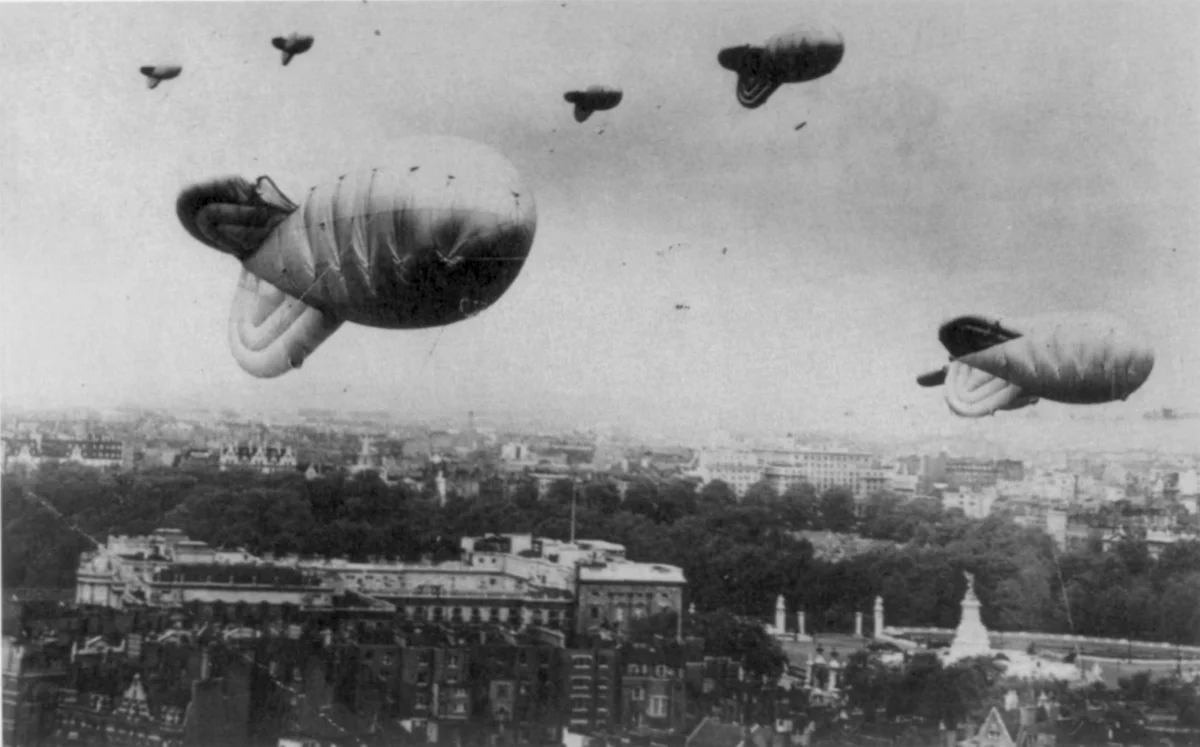
Barnes suffered throughout the Blitz and the later V1 campaign. High-explosive bombs, incendiaries, parachute mines and flying bombs fell across the area, destroying and damaging many houses. The Chief Wardens Office Report of October 1944 catalogued the strikes. At Barn Elms, the polo fields of the closed Ranelagh Club were turned to vegetable allotments under the Dig for Victory campaign.
Post-War Rebuilding
In 1954 the Georgian Barn Elms mansion, already derelict after wartime use, was destroyed by fire and demolished. The grounds became school playing fields and eventually the Barn Elms Sports Centre. In 1966, Olympic Studios opened as a recording studio in a former cinema on Church Road, launching a musical legacy that would span more than a thousand albums.
Conservation and Community
On 14 January 1969, Barnes Green became one of the earliest conservation areas designated under the new Civic Amenities Act 1967. In the 1970s, residents banded together to save Rose House, a seventeenth-century building on the High Street, from demolition to make way for a supermarket. The campaign gave birth to the Barnes Community Association, which has its headquarters in Rose House to this day.
Marc Bolan
On 16 September 1977, Marc Bolan of T. Rex was killed when the car in which he was a passenger struck a tree on Queen’s Ride, Barnes Common. He was twenty-nine. A memorial stone was placed at the site in 1997, and a bronze bust by Jean Robillard was unveiled in 2002 by his son, Rolan Bolan. The site is recognised as a Site of Rock ’n’ Roll Importance.
St Mary’s Church Fire
On 8 June 1978, fire largely destroyed St Mary’s Church. The Victorian and Edwardian additions were lost, but the destruction revealed hidden twelfth- and thirteenth-century elements. Architect Edward Cullinan designed a striking modern interior, and the church was re-hallowed on 26 February 1984.
The Wetland Centre
In the mid-1990s, four Victorian reservoirs at Barn Elms became redundant after the completion of Thames Water’s ring main. Over five years, 300,000 aquatic plants and 27,000 trees were planted by hand. On 26 May 2000, the WWT London Wetland Centre opened: forty-seven acres of urban wetland in the heart of London, a fitting close to a turbulent century.
Image sources
- twentieth-century.webp — Barrage balloons over London during WWII. Public domain (Crown Copyright expired). Source
Sources
- Municipal Borough of Barnes – Wikipedia
- London Borough of Richmond upon Thames – Wikipedia
- Castelnau, London – Wikipedia
- Marc Bolan’s Rock Shrine – Wikipedia
- WWT London Wetland Centre – Wikipedia
- 1928 Thames flood – Wikipedia