Barnes Pond Wildlife
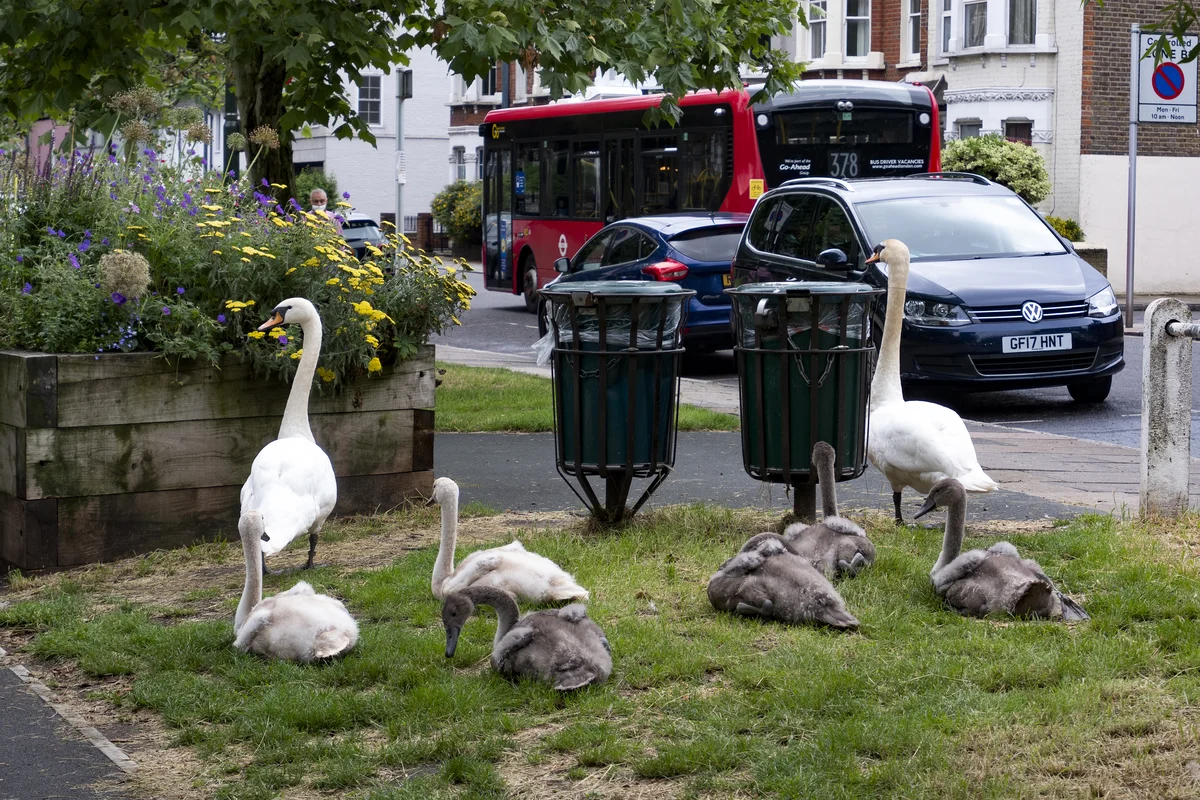
Barnes Pond, the village pond at the heart of Barnes Green, supports a rich variety of wildlife for a small urban water body. First documented in 1388 — when the Rector of Barnes held fishing rights in the pond — it has been a focal point for the community and its wildlife for over six centuries. Today the pond is a designated Site of Local Importance for Nature Conservation (SLINC) and part of the Barnes Green Conservation Area.
The Pond
Barnes Pond occupies an L-shaped position on Barnes Green, facing Barnes High Street. Its origins are thought to predate the seventeenth century: medieval records from 1388 mention the Rector John Lynn’s entitlement to fish in the pond, the earliest known documentary reference. Barnes Green originally had three ponds, of which only the Great Pond survives — now known simply as Barnes Pond.
The pond is most likely man-made or at least significantly modified. English village ponds were typically excavated to water livestock, assist in flax processing, fight fires, or supply drinking water. Barnes Pond served as the village water source well into the nineteenth century, when cows stopped for a drink and carts were driven through to wash off the mud of unmade roads.
Waterfowl
The pond’s resident bird populations include:
- Mute Swan (Cygnus olor) — a breeding pair that produces cygnets each summer, occasionally including the striking Polish colour variant with pale greyish-pink legs
- Mallard (Anas platyrhynchos) — resident breeding population
- Tufted Duck (Aythya fuligula) — resident diving duck
- Moorhen (Gallinula chloropus) — resident, breeding among bankside vegetation
- Coot (Fulica atra) — resident
- Greylag Goose (Anser anser) — resident flock
- Canada Goose (Branta canadensis) — resident, sometimes in large numbers
- Egyptian Goose (Alopochen aegyptiaca) — established resident
Grey Herons visit regularly, and Cormorants are occasionally seen. The nearby WWT London Wetland Centre and Beverley Brook corridor bring Kingfishers and other species into the wider Barnes Green area.
Other Wildlife
The pond and its surroundings support a broader community beyond waterfowl:
- Mammals — foxes, wood mice, short-tailed voles, and bank voles inhabit the Green. Eight bat species have been recorded across the Barnes area. Water Voles (Arvicola amphibius) are documented along the nearby Beverley Brook.
- Invertebrates — dragonflies and damselflies hunt over the water in summer, while over one hundred beetle species — including Stag Beetles — have been recorded on Barnes Common and the surrounding green spaces.
- Butterflies — species observed in the wider Barnes area include Peacock, Speckled Wood, Gatekeeper, Brimstone, and Small Copper.
Historical fishing rights confirm that fish inhabited the pond from at least the fourteenth century, and the connected Beverley Brook supports fish and eels today.
The 2001 Draining
In April 2001 the pond mysteriously emptied over approximately 48 hours. Investigation during the subsequent restoration revealed that a plug in a six-inch outlet pipe had become dislodged, draining the water — the cause was never established. The Barnes Community Association launched a Pond Appeal, raising approximately £200,000, and Richmond Council contributed a £60,000 grant. Experts installed an artificial liner — the first in the pond’s history — and carried out a full restoration. The pond was refilled in April 2003. The six-inch pipe now serves as the emergency overflow system.
Management
Barnes Green and its pond are managed jointly by the London Borough of Richmond upon Thames and the Barnes Community Association (BCA). Since 2013 the BCA has employed a dedicated Greenkeeper — Russell Greaves, who previously worked at the London Wetland Centre — to maintain the pond, the Green, and the surrounding planting. The Greenkeeper leads a team of volunteers, and the post is jointly funded by the BCA, Richmond Council, and sponsorship from the Harrodian School.
In July 2025 Barnes Green received its first Green Flag Award, recognised for its “historic charm, mature trees, and tranquil pond, forming a vital green link to Barnes Common.” The Green also carries Metropolitan Open Land (MOL) designation and forms part of a Tier 2 Archaeological Priority Area.
Seasonal Calendar
| Season | What to See |
|---|---|
| Spring (Mar–May) | Swan nesting and egg-laying; moorhen and coot nest-building; migrant warblers (Chiffchaff, Blackcap) arriving in the wider Barnes area |
| Summer (Jun–Aug) | Cygnets on the pond; duckling broods; dragonflies and damselflies; butterflies; Swifts overhead |
| Autumn (Sep–Nov) | Redwings and Fieldfares arriving from Scandinavia; waterfowl in autumn plumage; Canada Geese flocking |
| Winter (Dec–Feb) | Overwintering waterfowl at full numbers; Grey Heron more visible; winter thrushes feeding on berries |
Threats
The pond and its wildlife face several pressures:
- Water quality — Beverley Brook, which flows along the edge of Barnes Green, is affected by treated sewage discharges, misconnected domestic pipes, and surface runoff. Pet flea treatments containing fipronil and imidacloprid have been detected in the majority of UK river water samples, posing risks to aquatic invertebrates.
- Invasive species — Himalayan Balsam is a documented problem along Beverley Brook. Canada Geese, while established, can overgraze bankside vegetation.
- UK-wide waterfowl decline — national Wetland Bird Survey data show a ten-year decline of approximately ten per cent for Moorhen and twenty per cent for Coot.
- Urban pressures — heavy foot traffic, event wear, and occasional littering affect the Green and its margins.
Community Engagement
Barnes Pond is a focus of community life. The BCA’s Big Barnes Ponder consultations in 2013 and again in October 2023 — when over 250 residents attended in person and more than 600 comments were submitted — generated a Green Barnes working team dedicated to flood resilience, wildflower planting, and rain gardens. The monthly Collector’s Market on the Green and the annual Barnes Fair bring thousands of visitors past the pond each year. An experienced volunteer works with the Swan Sanctuary at Shepperton to rescue and rehabilitate injured swans and cygnets.
Image sources
- barnes-pond-wildlife.webp — Swan family, Barnes Pond. Author: Simon (londonlesstravelled). License: CC BY 2.0. Source
Sources
- Barnes Pond — Barnes Community Association
- Barnes Green — London Borough of Richmond upon Thames
- Barnes Green Pond — VisitRichmond
- Barnes Green — Parks and Gardens Trust
- Barnes Common and Green wildlife — GraftinGardeners