WWT London Wetland Centre
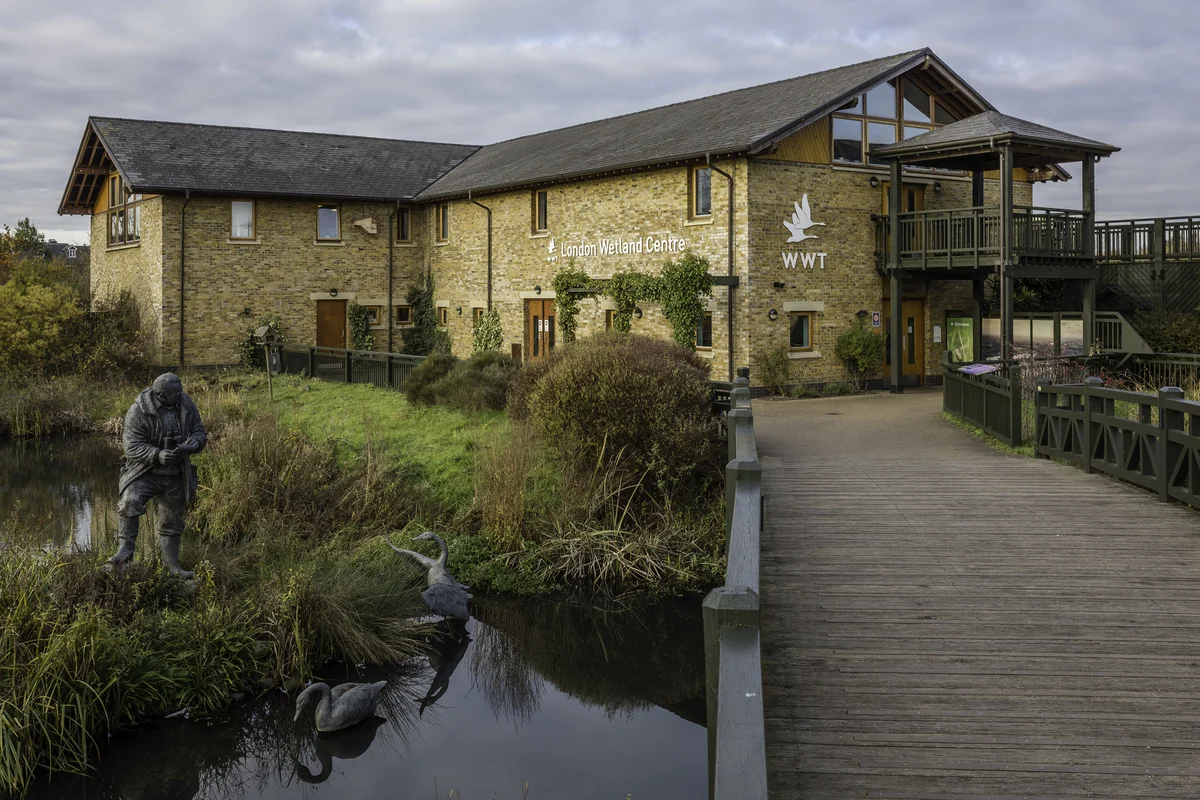
The WWT London Wetland Centre is a 42-hectare nature reserve in the heart of Barnes, created from four disused Victorian reservoirs. Opened in 2000 and designated a Site of Special Scientific Interest in 2002, it is one of the most remarkable urban conservation projects – an urban wilderness where bitterns, kingfishers, and water voles thrive just four miles from central London.
From Reservoirs to Wetland
The West Middlesex Waterworks Company purchased 85 acres at Barn Elms in 1825 and built four reservoirs to supply London’s growing population. Ownership passed to the Metropolitan Water Board in 1904, then to Thames Water in 1974. By the 1980s, the reservoirs were redundant.
The Wildfowl and Wetlands Trust, founded by Sir Peter Scott, saw an opportunity to create a truly urban nature reserve. In partnership with Thames Water and the developer Berkeley Homes, WWT embarked on a transformation that cost £16 million – £11 million donated by Berkeley Group from residential sales on the adjacent Barnes Waterside development, and £5 million raised from public donations and the National Lottery Heritage Fund.
Construction began in 1995. Engineers removed over 100,000 cubic metres of concrete and processed 500,000 cubic metres of soil to reshape the reservoirs into interconnected lagoons, reedbeds, wet grasslands, mudflats, and islands. On 26 May 2000, the centre was opened by Sir David Attenborough, who described it as “sensational, an extra lung for Londoners.”
Wildlife
The Wetland Centre supports over 220 recorded bird species, including nationally significant numbers of Gadwall and Northern Shoveler. Notable species include:
- Eurasian Bittern – wintering
- Common Kingfisher – resident
- Northern Lapwing – breeding
- Oystercatcher – breeding
- Sand Martin – summer visitor
- Water Rail – resident
- Little Grebe and Great Crested Grebe – breeding
Beyond birds, the centre is home to a thriving colony of water voles, as well as frogs, butterflies, dragonflies, and lizards.
Conservation Status
In February 2002, an area of 29.9 hectares was designated a Site of Special Scientific Interest (SSSI) as the “Barn Elms Wetland Centre,” recognising its ornithological importance for nationally significant wintering populations of wildfowl.
Facilities
The visitor centre, designed by JTP architects, includes a heated observatory overlooking the main wetlands with adjustable viewing telescopes. The centre has six hides and shelters, including the three-storey glass-fronted Peacock Tower and the Headley Discovery Hide, designed for newcomers to birdwatching.
Two main nature trails – the West route and South route – wind through the habitats. Binoculars are available for hire, and picnic benches are placed at regular intervals.
Education
Over 20,000 school students visit annually through curriculum-linked learning programmes. Sessions range from pond dipping for primary groups to ecological data collection for secondary students. The centre also supports SEND groups with tailored sensory experiences, and the Generation Wild programme offers free visits to schools with 25% or more pupils eligible for free school meals.
Awards
The Wetland Centre has won numerous awards, including the Tourism for Tomorrow Global Winner for Sustainable Tourism (2000), the Countryfile Magazine Award for Favourite Nature Reserve (2012), and recognition from RIBA for its innovative architecture.
Visiting
The centre is open 364 days a year (closed Christmas Day). It attracts approximately 220,000 visitors annually. The nearest station is Barnes, a 15-minute walk away.
Image sources
- wetland-centre.webp — London Wetland Centre. Author: David Iliff. License: CC BY-SA 3.0. Source
Sources
- WWT London Wetland Centre – Wikipedia
- WWT – London Wetland Centre (official)
- Berkeley Group – Celebrating 20 Years of London Wetlands
- London Natural History Society – London Wetland Centre