Castelnau
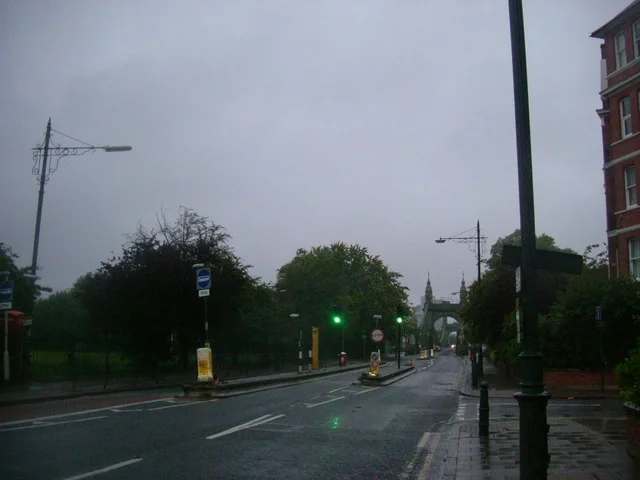
Castelnau is the main road and residential area forming the northern spine of Barnes, connecting the village to Hammersmith Bridge and thus to west London. Running approximately 1.1 miles as part of the A306, it takes its name from the Boileau de Castelnau family — French Huguenots who settled in north Barnes after fleeing religious persecution in the late seventeenth century.
Origin of the Name
The name derives from the Occitan words “castel nou,” meaning “new castle,” after the family’s ancestral home of Castelnau de la Garde in the Languedoc region of southern France. In 1691, the 10th Baron of Castelnau and St Croix fled France following the Revocation of the Edict of Nantes (1685). His son, Charles de Boileau de Castelnau, settled in north Barnes, and the family’s descendants developed the area over subsequent generations.
The road was originally called Upper Bridge Road. After the death of Major Charles Lestock Boileau in January 1889, it was renamed Castelnau in his honour. Similarly, Lower Bridge Road was renamed Lonsdale Road after the Lowther family, the other principal developers of the area.
History
The Catalyst: Hammersmith Bridge (1827)
The opening of the first Hammersmith Bridge on 6 October 1827 — designed by William Tierney Clark as the first suspension bridge over the Thames — was the catalytic event that triggered Castelnau’s entire development. The Hammersmith Bridge Company built approach roads across the Barn Elms estate, creating what became Castelnau.
Early Development (1840s)
Around 1840, Major Charles Lestock Boileau built Castelnau House on parkland by the river bend. In 1842, he commissioned architect William Laxton to build Castelnau Villas — twenty pairs of classical semi-detached villas (now 84–122 and 91–125 Castelnau), along with rows of cottages. The Boileau Arms pub was later established at the southern end of the bridge. Major Boileau was considered “the founder of the colony.”
Victorian Expansion
By 1868, the settlement had grown to around 140 houses and 800 residents. Holy Trinity Church was consecrated that year, designed by Thomas Allom. The current Hammersmith Bridge, designed by Sir Joseph Bazalgette, was rebuilt between 1883 and 1887 and is Grade II* listed.
In 1898, Castelnau Mansions were built — two blocks of 50 flats in redbrick mansion-flat style, designed by Delissa Joseph. Further blocks of flats followed between 1898 and 1909 in Castelnau Gardens and Riverview Gardens.
The Council Estate (1926)
In 1926, the London County Council built a cottage estate of 640 houses on the site of a former market garden, providing homes for those displaced by slum clearance elsewhere in London. Streets in the estate were named after Deans of St Paul’s who had been Lords of the Manor of Barnes: Everdon, Kilmington, Alderbury, Kentwode, Howsman, and Stillingfleet. Ownership transferred to Richmond upon Thames Council in 1971.
Modern Era
In the early 1960s, Castelnau House was demolished and replaced by Castelnau Library. The Castelnau Conservation Area was designated in 1977, with extensions in 1982, 1983, 1991, and 1996. The WWT London Wetland Centre opened in 2000 on the former Barn Elms reservoirs nearby.
Hammersmith Bridge has been closed to motor traffic since April 2019 due to structural concerns, significantly affecting Castelnau as the main approach road.
Architecture
The area contains a rich mix of architectural styles spanning two centuries:
- Grade II listed classical villas (1842) — 91–125 and 84–122 Castelnau, designed by William Laxton for Major Boileau
- Holy Trinity Church (1868) — stone and flint, designed by Thomas Allom
- Castelnau Mansions (1898) — Edwardian redbrick, designed by Delissa Joseph
- LCC cottage estate (1926) — garden suburb design typical of inter-war council housing
The entire area is protected by the Castelnau Conservation Area designation.
Notable Features
Castelnau Recreation Ground (Barnes Avenue, SW13 9AA) is a local park with a popular paddling pool open from May to September, a multi-use games area, and outdoor gym.
The area is home to several notable schools, including St Paul’s School (relocated to a 45-acre riverside site in 1968), The Harrodian School, and The Swedish School on Lonsdale Road, which makes Barnes popular with Swedish expatriates.
Notable Residents
Lyon Playfair, 1st Baron Playfair (1818–1898), professor of chemistry and Liberal MP, lived at 26 Castelnau Villas in 1851 while organising the Great Exhibition.
Practical Information
Castelnau runs south from Hammersmith Bridge into Barnes village centre. Buses 33, 72, and 485 serve the road. The nearest tube station is Hammersmith (Metropolitan, Piccadilly, District, and Hammersmith & City lines), accessed via the bridge. Barnes Bridge and Barnes railway stations are within walking distance.
Image sources
- castelnau.webp — Castelnau, Barnes SW13. Author: Phillip Perry. License: CC BY-SA 2.0. Source
Sources
- Castelnau, London — Wikipedia
- Riverview Gardens — History of Castelnau
- Hammersmith Bridge — Wikipedia
- Richmond Council — Castelnau Conservation Area Study