Schools and Education in Barnes
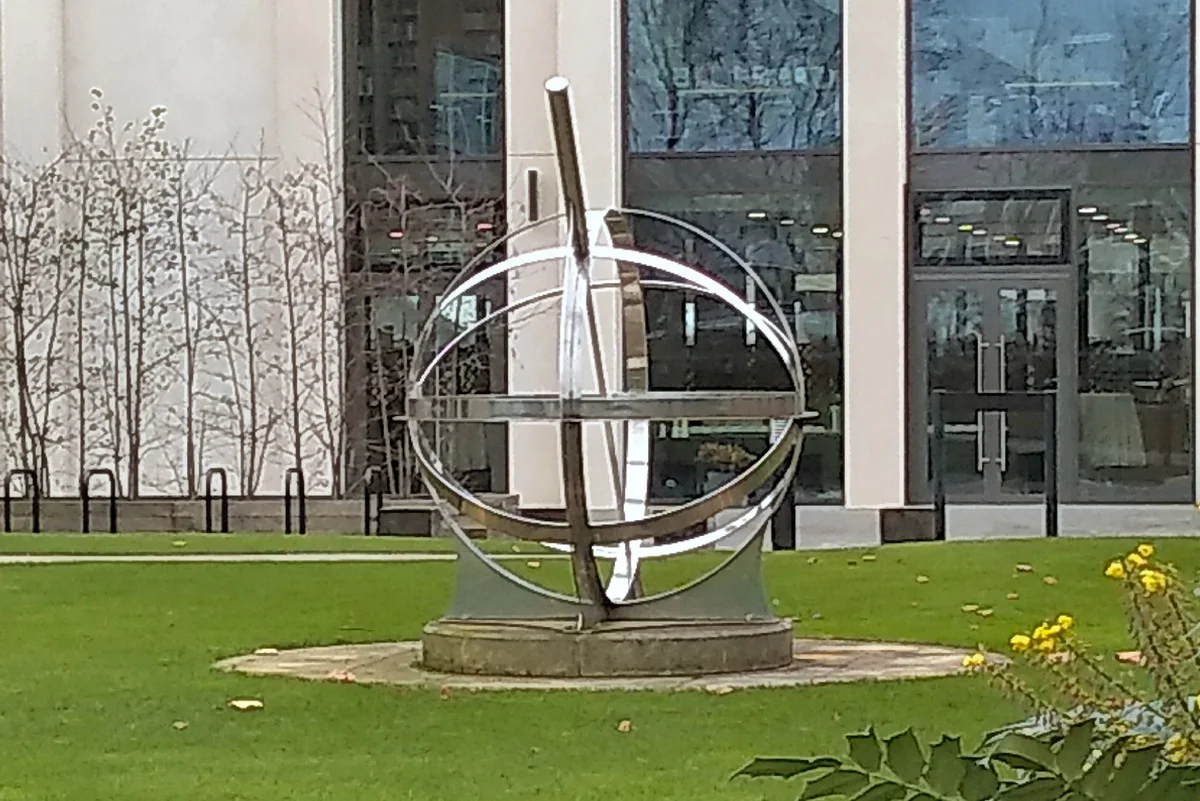
Barnes has an unusually rich educational landscape for a neighbourhood of its size, ranging from state primaries to one of England’s oldest and most prestigious schools. The concentration of well-regarded schools — though with no state secondary within the neighbourhood itself — is a defining feature of the area’s educational landscape.
State Primary Schools
Barnes Primary School
Founded in 1903 on Cross Street, Barnes Primary is a community school for ages three to eleven with approximately 420 pupils. In November 2022 Ofsted rated it Outstanding across all categories — quality of education, behaviour, personal development, leadership, and early years provision. A new building was completed for the school’s centenary in 2003.
Lowther Primary School
Lowther has served Barnes since 1929 from its site on Stillingfleet Road. A community school for ages three to eleven, it was rated Good by Ofsted in January 2023.
St Osmund’s Catholic Primary School
Located on Church Road, St Osmund’s is a Roman Catholic primary school for ages four to eleven, with approximately 150 pupils. Part of the Christ the Redeemer Catholic Education Trust since October 2024, it was rated Good by Ofsted in July 2019. The curriculum includes French, sport, and Catholic social teaching.
Thomson House School
A free school on Sheen Lane in neighbouring East Sheen, Thomson House opened in September 2013 and was rated Outstanding by Ofsted in June 2015 — the first free school in the borough of Richmond upon Thames to achieve that grade.
Secondary Schools
There are no state secondary schools within Barnes itself. Children from the neighbourhood typically attend schools elsewhere in the borough of Richmond upon Thames, including Richmond Park Academy in East Sheen, Christ’s School in Richmond, and Waldegrave School in Twickenham, among others.
Independent Schools
St Paul’s School
St Paul’s is one of England’s oldest and most distinguished schools, founded in 1509 by John Colet, Dean of St Paul’s Cathedral, for 153 boys. It is one of the nine original Clarendon public schools, alongside Eton, Harrow, and Westminster.
The school occupied several sites near the cathedral before moving to Hammersmith Road in 1884. In 1968 it relocated to its current forty-five-acre campus on Lonsdale Road in Barnes, built on the former site of the West Middlesex Waterworks Company reservoirs, which had been filled with spoil from the construction of the Victoria Line.
Together with its preparatory school St Paul’s Juniors, St Paul’s educates boys aged seven to eighteen, with approximately 1,000 pupils across both schools. In the Sunday Times Parent Power league table it has ranked as the top boys’ school in the country. Its facilities include theatres, a concert hall, an art gallery, a boat club on the Thames, a swimming pool, and extensive playing fields.
Notable former pupils include the poet John Milton (1608–1674), the diarist Samuel Pepys (1633–1703), the astronomer Edmond Halley (1656–1742), and Field Marshal Bernard Montgomery (1887–1976).
St Paul’s Juniors
Originally founded in 1881 as “Bewsher’s” by Samuel Bewsher with six pupils, the prep school was incorporated into St Paul’s School in 1883, named Colet Court from 1892, and renamed St Paul’s Juniors in 2016. It shares the Lonsdale Road campus.
The Harrodian School
The Harrodian is an independent co-educational day school for ages four to eighteen, with approximately one thousand pupils on a twenty-five-acre riverside campus on Lonsdale Road. It was founded in September 1993 by Sir Alford and Lady Eliana Houstoun-Boswall on the site of the former Harrodian Club — a sports and social club for employees of Harrods department store, a sports and social club for Harrods employees established in 1894 and based at the Lonsdale Road site from 1904 until its closure around 1990.
Notable former pupils include the actors Robert Pattinson, George MacKay, Will Poulter, and Tom Sturridge, and the comedian Jack Whitehall.
The Swedish School
The Swedish School in London (Svenska Skolan i London) is a unique cultural institution in Barnes. Founded in 1907 at the Swedish church Ulrika Eleonora in Marylebone, the school moved to a purpose-built building at 82 Lonsdale Road in 1976, designed by Swedish architect Klas Nilsson. It teaches children aged three to nineteen, predominantly in Swedish, producing bilingual graduates.
With approximately two hundred pupils across its Barnes campus and a sixth-form centre near the National Archives in Kew (opened 2019), the school was rated Outstanding by Ofsted in June 2023 — its fourth consecutive Outstanding rating. The school’s presence has attracted a lively Swedish community to Barnes, with regular Scandinavian cultural events, picnics, and celebrations.
Historical Education in Barnes
Education in Barnes has deep roots. Before the Elementary Education Act of 1870, charity schools served the area — benefactors funded Sunday schools, clothing, and schooling for the poor. A school for girls and infants was built on Barnes Green in 1850, and the Westfield Boys’ School followed in 1870, the very year of the Act.
Further expansion came rapidly: the Westfield Girls’ School in 1880, Castelnau Girls and Infants’ School in 1883, and a separate Westfield Infants’ School in 1904. During the Second World War approximately 200 Barnes schoolchildren were evacuated to Cambridge, and a flying bomb destroyed a school on Hayman Street in 1944.
The modern era transformed Barnes’s educational landscape when St Paul’s School arrived from Hammersmith in 1968, the Swedish School moved from central London in 1976, and the Harrodian School opened in 1993.
Beyond the Classroom
Barnes offers an unusually wide range of extracurricular activities for children and young people. Scouting, guiding, sports clubs, dance schools, and youth theatre all operate in the neighbourhood — for a comprehensive guide, see Children’s Activities and Clubs.
The Barnes Children’s Literature Festival, held annually since 2015, has grown into the largest children’s literary festival in London, with over a hundred events attracting prominent authors and illustrators. Numerous clubs and interest groups — from art classes at Barnes Atelier to the Barnes Community Players — provide further opportunities for young people and families.
Image sources
- schools.webp — St Paul’s School sculpture. Author: AndyScott. License: CC BY-SA 4.0. Source
Sources
- Barnes Primary School — official website
- Barnes Primary School — Ofsted report (November 2022)
- St Paul’s School, London — Wikipedia
- The Harrodian School — Wikipedia
- The Swedish School in London — Wikipedia
- Parishes: Barnes — British History Online (Victoria County History)